
Colonoscopy in Nashik: Common Reasons Doctors Recommend It
A colonoscopy is an important medical procedure used to examine the inner lining of the large intestine (colon) and rectum. Doctors may recommend it to investigate unexplained digestive symptoms, identify intestinal abnormalities, screen for colorectal cancer or monitor certain existing bowel conditions.
Although the procedure may sound uncomfortable or intimidating, understanding why it is recommended and what happens during the examination can help patients feel more prepared.
If your doctor has advised a colonoscopy in Nashik, knowing the common reasons for the test, the preparation process and what to expect can help you make informed decisions about your digestive health.
What Is a Colonoscopy?
A colonoscopy is a diagnostic and sometimes therapeutic procedure that allows a doctor to examine the inside of the colon and rectum.
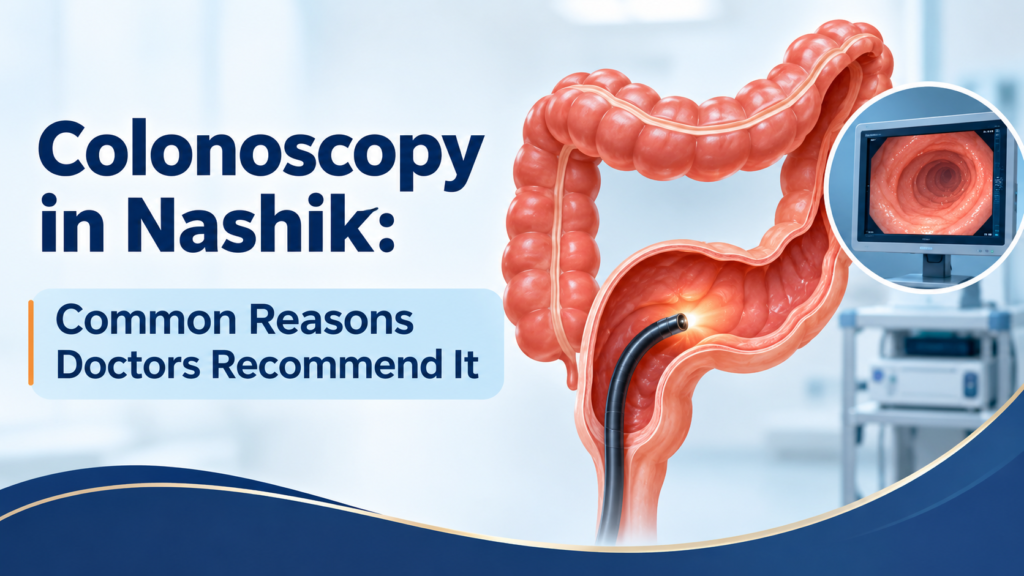
During the procedure, a thin, flexible instrument called a colonoscope is gently inserted through the rectum. It has a small camera and light that transmit images to a monitor, allowing the doctor to examine the intestinal lining.
A colonoscopy can help identify:
- Colon polyps
- Inflammation of the intestinal lining
- Ulcers
- Sources of intestinal bleeding
- Abnormal tissue growths
- Signs of colorectal cancer
- Changes associated with inflammatory bowel disease
If required, the doctor may also take a small tissue sample (biopsy) or remove certain polyps during the same procedure.
Why Do Doctors Recommend a Colonoscopy?
A colonoscopy is recommended for different medical reasons. The decision depends on a person’s symptoms, age, medical history, family history and previous investigation results.
Here are some common reasons doctors may advise the procedure.
1. Blood in the Stool or Rectal Bleeding
Blood in the stool or bleeding from the rectum should not automatically be assumed to be caused by piles.
Although haemorrhoids and anal fissures are possible causes, bleeding can also be associated with intestinal inflammation, polyps, diverticular disease or colorectal cancer.
A doctor may recommend colonoscopy to examine the large intestine and identify a possible source of bleeding.
The need for this investigation depends on the amount of bleeding, associated symptoms, age and other clinical factors.
2. Persistent Changes in Bowel Habits
Changes in bowel habits that continue for an extended period may require medical evaluation.
These changes can include:
- Persistent diarrhoea
- Long-lasting constipation
- Alternating diarrhoea and constipation
- Changes in stool frequency
- Unusual changes in stool appearance
A colonoscopy may help investigate possible causes, including inflammatory bowel disease, intestinal polyps and other conditions affecting the colon.
Not every change in bowel habits requires colonoscopy. A gastroenterologist will first assess the symptoms and decide whether the procedure is appropriate.
3. Unexplained Abdominal Pain
Recurring or unexplained abdominal discomfort may sometimes be related to conditions affecting the large intestine.
If the symptoms persist or are accompanied by other concerning findings, a doctor may recommend additional investigations.
Depending on the clinical assessment, colonoscopy can help examine the colon for inflammation, ulcers, polyps or other abnormalities.
4. Unexplained Iron-Deficiency Anaemia
Iron-deficiency anaemia occurs when the body does not have enough iron to produce adequate healthy red blood cells.
In some individuals, this may be related to slow or hidden gastrointestinal bleeding.
When iron deficiency is unexplained, particularly in adults, a doctor may recommend investigating the digestive tract. Colonoscopy can help identify possible sources of bleeding, including polyps, inflammation or other abnormalities.
The doctor may also recommend an upper GI endoscopy or other investigations depending on the patient’s condition.
5. Screening for Colorectal Cancer
Colonoscopy may be recommended as a screening test for colorectal cancer in people who have no noticeable symptoms but meet relevant age- or risk-based screening criteria.
Screening can help identify precancerous polyps before they develop into cancer.
The appropriate age to begin screening and the interval between tests depend on individual risk and local medical recommendations.
People with a family history of colorectal cancer, previous colorectal polyps or certain inherited conditions may need earlier or more frequent assessment.
Discuss your personal screening requirements with a qualified doctor rather than assuming that everyone needs a colonoscopy at the same age.
6. Detection and Removal of Colon Polyps
Colon polyps are small growths that develop on the inner lining of the large intestine.
Most polyps are not cancerous. However, certain types can develop into colorectal cancer over time.
During colonoscopy, a doctor may identify and remove suitable polyps using specialised instruments. This procedure is known as a polypectomy.
Removed tissue may be sent to a laboratory for examination to determine its type and whether further follow-up is necessary.
7. Evaluation of Inflammatory Bowel Disease
Inflammatory bowel disease (IBD) includes conditions such as ulcerative colitis and Crohn’s disease.
Depending on the type and location of the disease, patients may experience persistent diarrhoea, abdominal pain, rectal bleeding or other digestive symptoms.
Colonoscopy can help doctors examine the intestinal lining, assess inflammation and collect biopsy samples when needed.
It may also be used to monitor the condition and evaluate treatment response in selected patients.
8. Follow-Up After Previous Polyps or Bowel Disease
People who have previously had colon polyps removed or have been diagnosed with certain intestinal conditions may require follow-up colonoscopy.
The timing depends on factors such as:
- Number of polyps previously identified
- Size and type of polyps
- Biopsy or pathology findings
- Previous colonoscopy results
- Personal and family medical history
- Presence of inflammatory bowel disease
Your doctor will recommend an appropriate follow-up schedule based on your individual findings.
How Should You Prepare for a Colonoscopy?
Proper preparation is essential for a successful colonoscopy.
The large intestine needs to be cleaned before the examination so that the doctor can clearly view its inner lining. If stool remains inside the colon, it may hide small polyps or other abnormalities.
Your hospital or treating doctor will provide specific preparation instructions.
1. Follow the Recommended Diet
You may be asked to follow a low-fibre diet for a specified period before the procedure.
Depending on your hospital’s instructions, certain foods may need to be avoided, including:
- Whole grains
- Nuts and seeds
- Raw vegetables
- Foods containing large amounts of fibre
A clear-liquid diet may also be recommended for a specified period before the procedure.
Follow the written dietary instructions provided by your medical team.
2. Take the Prescribed Bowel Preparation Medicine
Doctors generally prescribe special laxative preparations to empty the bowel before colonoscopy.
These medicines cause frequent bowel movements and help remove stool from the large intestine.
It is important to take the preparation exactly as instructed. Incomplete bowel cleansing can affect the quality of the examination and may mean that the procedure needs to be repeated.
3. Discuss Your Regular Medicines
Inform your doctor about all medicines, vitamins and supplements you take.
This is particularly important if you use:
- Blood-thinning medicines
- Diabetes medicines or insulin
- Blood pressure medicines
- Iron supplements
- Medicines for heart or kidney conditions
Some medicines may require temporary adjustment. Never stop or change prescribed medication without medical advice.
4. Inform the Doctor About Existing Health Conditions
Before the procedure, discuss any relevant medical history, including:
- Heart disease
- Kidney disease
- Liver disease
- Diabetes
- Bleeding disorders
- Previous reactions to sedation or anaesthesia
- Allergies to medicines
If you are pregnant or may be pregnant, inform your medical team before the procedure.
5. Arrange Transportation if Sedation Is Planned
If sedation is used, arrange for a responsible adult to accompany you home.
You may feel drowsy after the procedure, and your ability to drive or operate machinery may be affected. Follow your hospital’s instructions regarding recovery and transportation.
What Happens During a Colonoscopy?
The procedure is generally performed in a hospital or an endoscopy unit by a trained medical professional.
The process usually involves the following stages.
Step 1: Initial Assessment
The medical team reviews your symptoms, medical history, current medicines and bowel preparation.
You may be asked to change into a hospital gown before the examination.
Step 2: Sedation or Medication
Depending on your medical condition and the hospital’s protocol, sedative or pain-relieving medication may be given to improve comfort.
The medical team will explain the available options before the procedure.
Step 3: Positioning
You will generally be asked to lie on your side on an examination table.
The doctor will then gently introduce the colonoscope through the rectum.
Step 4: Examination of the Colon
The flexible instrument is carefully guided through the large intestine.
The camera transmits images to a monitor, allowing the doctor to examine the intestinal lining for polyps, inflammation, bleeding and other abnormalities.
A small amount of air or carbon dioxide may be introduced to help improve visibility.
Step 5: Biopsy or Polyp Removal if Required
If an abnormal area is identified, the doctor may collect a small tissue sample for laboratory examination.
Suitable polyps may also be removed during the procedure.
These additional steps depend on the findings and the doctor’s assessment.
Step 6: Recovery and Observation
After the examination, you will be monitored while any sedative medication wears off.
The doctor may discuss the initial findings and explain whether additional tests or follow-up are required.
How Long Does a Colonoscopy Take?
A routine colonoscopy often takes approximately 30 to 45 minutes, although the duration can vary depending on the examination and whether additional procedures are performed.
The total hospital visit usually takes longer because time is needed for registration, preparation checks, the examination and recovery.
If sedation is used, additional observation may be required before discharge.
Is Colonoscopy Painful?
Experiences vary from person to person.
Some patients may experience temporary abdominal pressure, bloating or cramping during the examination. Sedation or pain-relieving medication may be used to improve comfort, depending on the patient’s condition and the available arrangements.
Discuss any concerns about discomfort with your doctor before the procedure.
What Happens After a Colonoscopy?
Following the examination, you may remain in the recovery area until the medical team confirms that you are ready to leave.
Some temporary effects may include:
- Mild abdominal bloating
- Passing gas
- Temporary abdominal cramps
- Mild discomfort
If a biopsy was taken or a polyp was removed, the doctor will explain what to expect and whether additional follow-up is needed.
Pathology results may take several days or longer, depending on the laboratory and the type of sample.
Follow your doctor’s instructions about eating, drinking, medicines and returning to normal activities.
When Should You Seek Medical Attention After Colonoscopy?
Although serious complications are uncommon, seek urgent medical advice if you experience:
- Severe or worsening abdominal pain
- Heavy or increasing rectal bleeding
- Fever or chills
- Persistent vomiting
- Dizziness or fainting
- Difficulty breathing or chest pain
Do not ignore these symptoms after the procedure.
Are There Any Risks Associated With Colonoscopy?
Colonoscopy is generally considered a safe procedure when performed by trained professionals. However, it does carry some potential risks.
These may include:
- Bleeding, particularly after polyp removal or biopsy
- Injury or perforation of the bowel wall
- Reactions to sedative medicines
- Heart or breathing-related complications associated with sedation
The likelihood of complications depends on individual health factors and whether additional treatment is performed during the examination.
Your doctor will discuss the relevant benefits and risks before the procedure.
Where to Enquire About Colonoscopy in Nashik?
If your doctor has recommended a colonoscopy, choosing an appropriate medical facility and understanding the procedure are important steps.
At Arihant Multispeciality Hospital in Nashik, patients can enquire through the Medicine & Gastroenterology department about colonoscopy-related consultations and procedure arrangements.
Before booking, consider confirming:
- Whether colonoscopy is currently available.
- Which doctor will perform the procedure.
- What preparation instructions you need to follow.
- Whether sedation is planned.
- What the procedure and recovery arrangements involve.
- How biopsy or polyp-removal results will be communicated.
For procedure information, visit the hospital’s dedicated Colonoscopy page.
You can also explore the Medicine & Gastroenterology department for information about digestive health services.
For appointment enquiries, visit the Contact Us page or call +91 91300 55959.
Frequently Asked Questions About Colonoscopy
1. Why do doctors recommend a colonoscopy?
Doctors may recommend colonoscopy to investigate rectal bleeding, persistent changes in bowel habits, unexplained iron-deficiency anaemia, abdominal symptoms, suspected intestinal disease or to screen for colorectal cancer in people who meet screening criteria.
2. Can colonoscopy detect colorectal cancer?
Colonoscopy can help identify suspicious growths and abnormalities in the colon and rectum. If necessary, a biopsy can be taken for laboratory testing to establish a diagnosis.
3. Can colon polyps be removed during colonoscopy?
Yes. Suitable polyps can often be removed during the same procedure using specialised instruments. The removed tissue may be sent for laboratory examination.
4. Is bowel preparation necessary before colonoscopy?
Yes. Bowel preparation helps clear stool from the large intestine so the doctor can examine its lining properly. Follow the exact diet and medication instructions provided by your hospital.
5. How long does a colonoscopy take?
A routine colonoscopy often takes around 30 to 45 minutes. The overall hospital visit may take longer because of preparation and recovery.
6. Is sedation necessary for colonoscopy?
Sedation is not identical for every patient or hospital. Your doctor will explain the available options and recommend an approach based on your health, procedure requirements and clinical assessment.
7. When will I receive my colonoscopy results?
The doctor may discuss the initial findings after the procedure. If a biopsy or polyp removal is performed, laboratory results may take several days or longer.
8. How can I enquire about colonoscopy in Nashik?
You can contact Arihant Multispeciality Hospital to ask about the Medicine & Gastroenterology department, colonoscopy availability and appointment arrangements.
Conclusion
Colonoscopy is an important investigation for examining the large intestine and identifying conditions such as polyps, inflammation, intestinal bleeding and other abnormalities. Doctors may recommend it for specific symptoms, colorectal cancer screening or follow-up of previously diagnosed bowel conditions.
Understanding why the procedure is recommended and following the preparation instructions can help patients approach the examination with greater confidence.
If you are looking for information about colonoscopy in Nashik, contact Arihant Multispeciality Hospital to enquire about the Medicine & Gastroenterology department and available consultation arrangements.
For appointment enquiries, call +91 91300 55959.