
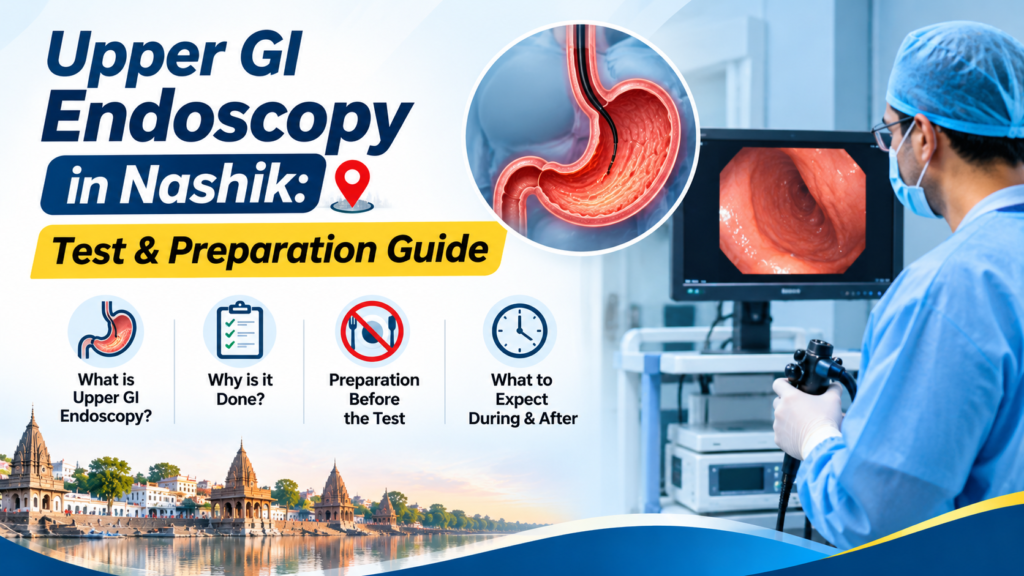
Upper GI Endoscopy in Nashik: What the Test Checks and How to Prepare
Digestive problems such as persistent acidity, difficulty swallowing, recurring stomach pain and unexplained vomiting may sometimes require a closer examination of the upper digestive tract. When a doctor needs to examine the food pipe, stomach or the beginning of the small intestine, an Upper GI Endoscopy may be recommended.
Upper GI endoscopy is a commonly used medical procedure that allows a gastroenterologist to examine the inner lining of the upper digestive system using a thin, flexible tube equipped with a camera. It can help identify certain digestive conditions, investigate unexplained symptoms and, in some cases, provide treatment during the same procedure.
If your doctor has recommended an upper GI endoscopy in Nashik, understanding why the test is performed, how to prepare and what happens during the examination can help you feel more informed before your appointment.
What Is Upper GI Endoscopy?
Upper gastrointestinal endoscopy is a procedure used to examine three main parts of the digestive system:
- Oesophagus: The food pipe that carries food and liquids from the mouth to the stomach.
- Stomach: The organ where food is mixed with digestive juices.
- Duodenum: The first part of the small intestine, immediately after the stomach.
The procedure is also known as upper endoscopy, gastroscopy or oesophagogastroduodenoscopy (OGD/EGD).
During the examination, a doctor gently guides a thin, flexible instrument called an endoscope through the mouth and into the upper digestive tract. A small camera at its tip sends images to a monitor, allowing the doctor to examine the lining of these organs.
The procedure does not normally interfere with breathing.
Why Is Upper GI Endoscopy Recommended?
A doctor may recommend upper GI endoscopy when symptoms require direct examination of the upper digestive tract or when other investigations have not provided enough information.
Some common reasons include:
1. Persistent Acidity and Heartburn
Frequent heartburn or persistent acid reflux may require further assessment, particularly when symptoms continue despite appropriate treatment.
Endoscopy can help identify inflammation of the oesophagus, erosions or other changes associated with reflux disease.
2. Recurrent Stomach Pain
Ongoing pain or discomfort in the upper abdomen may have several causes. An upper GI endoscopy can help identify conditions such as gastritis, stomach ulcers or other abnormalities affecting the digestive tract.
3. Difficulty Swallowing
Difficulty swallowing, also known as dysphagia, can occur due to narrowing, inflammation or other problems affecting the oesophagus.
Endoscopy allows the doctor to examine the area and determine whether further investigation or treatment is required.
4. Unexplained Vomiting or Persistent Nausea
Repeated vomiting or persistent nausea may sometimes be associated with conditions affecting the stomach or upper digestive tract. Depending on the clinical assessment, an endoscopy may be recommended to investigate the underlying cause.
5. Suspected Gastric or Duodenal Ulcers
Stomach and duodenal ulcers can cause upper abdominal discomfort, nausea and other digestive symptoms. Upper GI endoscopy helps doctors directly examine the lining and identify ulcers.
6. Suspected Bleeding in the Upper Digestive Tract
Symptoms such as vomiting blood or passing black, tar-like stools may indicate gastrointestinal bleeding and require urgent medical assessment.
In selected cases, upper GI endoscopy can help identify the bleeding source and allow the doctor to perform treatment.
What Conditions Can Upper GI Endoscopy Detect?
Upper GI endoscopy can help identify or investigate several conditions affecting the upper digestive tract.
These may include:
| Condition | What the Doctor Checks |
| Gastritis | Inflammation of the stomach lining |
| Oesophagitis | Inflammation or damage to the food pipe lining |
| Peptic ulcers | Sores in the stomach or duodenum |
| Gastro-oesophageal reflux disease (GERD) | Changes associated with repeated acid reflux |
| Oesophageal narrowing | Narrowing that may affect swallowing |
| Hiatal hernia | Structural changes near the junction of the oesophagus and stomach |
| Abnormal growths | Polyps or other unusual tissue changes |
| Upper GI bleeding | Possible sources of bleeding in the oesophagus, stomach or duodenum |
If necessary, the doctor may take a small tissue sample, called a biopsy, for laboratory examination.
A biopsy does not automatically mean that cancer is suspected. It may also be used to investigate inflammation, infection or other tissue changes.
How to Prepare for an Upper GI Endoscopy
Preparation is important because the stomach should be sufficiently empty for the doctor to examine the digestive tract clearly and reduce the risk of complications.
Your hospital or treating doctor will provide specific instructions before the appointment.
1. Follow the Fasting Instructions
Patients are generally asked to avoid food and drinks for several hours before upper GI endoscopy.
Depending on the procedure and hospital protocol, fasting may be required for approximately six to eight hours. The exact instructions regarding water may vary.
Do not assume that drinking water is permitted during the fasting period. Follow the specific instructions provided by your endoscopy team.
2. Inform the Doctor About Your Medicines
Before the procedure, provide a complete list of medicines, vitamins and supplements you take.
Pay particular attention to:
- Blood-thinning medicines, such as warfarin or other anticoagulants.
- Antiplatelet medicines, such as aspirin or clopidogrel.
- Diabetes medicines and insulin.
- Blood pressure medicines.
- Iron supplements.
- Pain-relieving medicines and other prescribed treatments.
Some medicines may need adjustment depending on the procedure and your medical condition.
Do not stop or change any prescribed medicine without instructions from your doctor.
3. Share Your Medical History
Inform the doctor if you have any history of:
- Heart or lung disease.
- Kidney or liver disease.
- Diabetes.
- Allergies to medicines or anaesthetic agents.
- Previous reactions to sedation or anaesthesia.
- Bleeding disorders.
- Pregnancy or a possibility of pregnancy.
This information helps the medical team assess the procedure and decide whether any additional precautions are needed.
4. Arrange Someone to Accompany You
If sedation is planned, arrange for a family member or responsible adult to accompany you and take you home.
The effects of sedative medicines may continue after the procedure. You should not drive or operate machinery until the effects have fully worn off and you have followed your medical team’s advice.
5. Carry Your Previous Medical Reports
Bring relevant medical records, previous endoscopy reports, investigation results and your current medication list.
These details can help the doctor understand your symptoms and plan the examination appropriately.
What Happens During an Upper GI Endoscopy?
The procedure is generally performed in a hospital or endoscopy unit. The exact process may vary depending on the patient’s condition and whether sedation is used.
Here is what patients can generally expect.
Step 1: Initial Assessment
Before the examination, the medical team reviews your medical history, symptoms, allergies and current medicines.
You may also be asked to change into a hospital gown. The doctor explains the procedure and discusses consent.
Step 2: Throat Anaesthetic or Sedation
A local anaesthetic throat spray may be used to reduce discomfort and the gag reflex.
In some cases, sedative medication may be administered through an intravenous line to help you relax or sleep during the procedure.
The choice depends on the patient’s condition, the procedure and the medical team’s assessment.
Step 3: Positioning for the Examination
You will generally be asked to lie on your side on an examination bed.
A small mouthguard may be placed to protect your teeth and the endoscope.
Step 4: Insertion of the Endoscope
The doctor gently passes the flexible endoscope through your mouth and into the oesophagus, stomach and duodenum.
The camera sends images to a monitor, allowing the doctor to examine the inner lining.
You may experience some gagging or pressure, but sedation or throat anaesthetic may help reduce discomfort.
Step 5: Examination and Biopsy if Required
The doctor examines the digestive tract for inflammation, ulcers, bleeding, narrowing or other abnormalities.
If necessary, small tissue samples may be collected for laboratory testing. Certain treatments, such as controlling bleeding or widening a narrowed area, may also be possible during the procedure.
Step 6: Completion and Recovery
Once the examination is complete, the endoscope is gently removed.
You are then monitored while the effects of any sedative medicine wear off.
How Long Does Upper GI Endoscopy Take?
A diagnostic upper GI endoscopy commonly takes around 10 to 20 minutes, although the duration may vary depending on the findings and whether additional procedures are performed.
The total time spent at the hospital is usually longer because it includes preparation, the examination and post-procedure observation.
If sedation is used, additional recovery time may be required before you are discharged.
Is Upper GI Endoscopy Painful?
Upper GI endoscopy is generally not considered a painful procedure, although some people experience temporary discomfort.
Possible sensations include:
- A gagging sensation when the endoscope is introduced.
- Mild throat discomfort.
- A feeling of fullness or bloating due to air introduced during the examination.
- Temporary nausea.
Throat anaesthetic spray or sedation may be used to improve comfort. Your doctor will explain the available options before the examination.
What Happens After Upper GI Endoscopy?
After the procedure, you may remain under observation until the medical team confirms that you are ready to go home.
Some temporary effects can include:
- Mild sore throat.
- Bloating or belching.
- Temporary nausea.
- Drowsiness if sedative medicines were used.
Follow the instructions provided by the medical team regarding eating, drinking and restarting your usual medicines.
If a biopsy has been taken, the tissue sample will be sent for laboratory examination. These results may take several days or longer, depending on the test.
When Should You Seek Medical Attention After Endoscopy?
Although complications are uncommon, contact your medical team or seek urgent medical attention if you experience:
- Severe or worsening abdominal or chest pain.
- Difficulty breathing.
- Increasing difficulty or pain while swallowing.
- Vomiting blood or material resembling coffee grounds.
- Black, tar-like stools.
- Fever or other concerning symptoms.
These symptoms should not be ignored after an endoscopy.
Are There Any Risks Associated With Upper GI Endoscopy?
Upper GI endoscopy is generally considered a safe procedure when performed by a trained medical professional with appropriate monitoring.
However, like other medical procedures, it has some potential risks.
These may include:
- Reactions to sedative medicines.
- Bleeding, particularly when a biopsy or treatment is performed.
- Injury or perforation of the digestive tract lining.
- Breathing or heart-related complications associated with sedation.
Serious complications are uncommon. The doctor will assess your medical history and explain the relevant risks before the procedure.
Where to Enquire About Upper GI Endoscopy in Nashik?
If your doctor has recommended an upper GI endoscopy, it is important to discuss the procedure, preparation instructions and available arrangements with the hospital.
At Arihant Multispeciality Hospital in Nashik, patients can enquire through the Medicine & Gastroenterology department regarding digestive health consultations and endoscopy-related services.
Before scheduling the procedure, confirm:
- Whether the recommended endoscopy service is available.
- Which doctor will perform the examination.
- The preparation and fasting instructions.
- Whether sedation is planned.
- The expected procedure and recovery time.
- How and when the results will be discussed.
For department information, visit the Medicine & Gastroenterology page.
For appointment enquiries, visit the Contact Us page or call +91 91300 55959.
Frequently Asked Questions About Upper GI Endoscopy
1. What is checked during an upper GI endoscopy?
An upper GI endoscopy examines the oesophagus, stomach and duodenum. It can help identify inflammation, ulcers, bleeding, narrowing and other abnormalities affecting the upper digestive tract.
2. Is fasting necessary before upper GI endoscopy?
Yes. Patients are generally asked to avoid food and drinks for a specified period before the examination. Follow the exact fasting instructions provided by your hospital.
3. Can I take my regular medicines before an endoscopy?
Some medicines may need adjustment, particularly blood thinners and diabetes medicines. However, you should never stop prescribed medication without consulting your doctor.
4. How long does an upper GI endoscopy take?
A routine diagnostic examination often takes approximately 10 to 20 minutes. Additional time may be needed for preparation, recovery or treatment during the procedure.
5. Is a biopsy always required during upper GI endoscopy?
No. A biopsy is taken only when the doctor considers it necessary to investigate a particular finding or condition.
6. Can I go home after upper GI endoscopy?
Many patients go home on the same day after the required observation period. If sedation is used, you may need someone to accompany you home.
7. When will I receive my endoscopy results?
The doctor may discuss some findings immediately after the examination. If a biopsy is taken, laboratory results may take several days or longer.
8. How can I enquire about upper GI endoscopy in Nashik?
You can contact Arihant Multispeciality Hospital to enquire about the Medicine & Gastroenterology department, procedure availability, consultation and appointment arrangements.
Conclusion
Upper GI endoscopy allows doctors to examine the oesophagus, stomach and duodenum directly. It can help investigate persistent digestive symptoms, identify conditions such as gastritis and ulcers, and support certain treatments when required.
Understanding the preparation instructions, discussing your medicines and medical history, and following post-procedure advice can help you approach the examination with greater confidence.
If you have been advised to undergo an upper GI endoscopy in Nashik, contact Arihant Multispeciality Hospital to enquire about the relevant department and available consultation arrangements.
For appointment enquiries, call +91 91300 55959.