
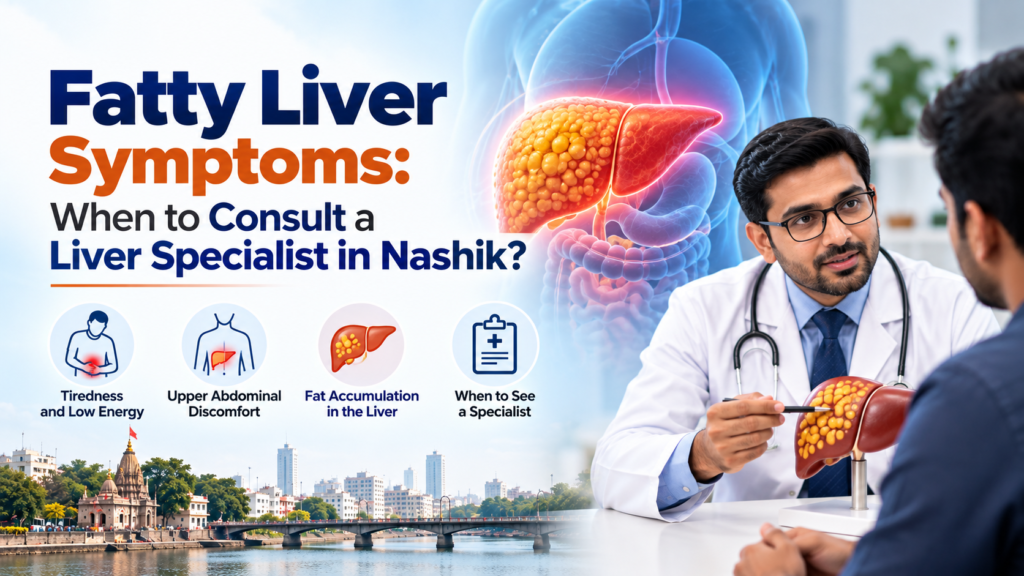
Fatty Liver Symptoms: When to Consult a Liver Specialist in Nashik
Fatty liver disease can develop without causing any noticeable symptoms. Many people discover they have fatty liver during a routine health check or an abdominal ultrasound done for another reason. Others may experience tiredness or discomfort in the upper right side of the abdomen, although these symptoms can have several possible causes.
If you are concerned about fatty liver symptoms, it is important to understand your risk factors and know when to seek medical advice. Consulting a liver specialist in Nashik can help you understand your test results, assess your liver health and determine whether further investigations are needed.
Fatty liver is often associated with conditions such as diabetes, excess body weight and high cholesterol. Early assessment can help identify people who may need lifestyle changes, regular monitoring or further treatment.
What Is Fatty Liver Disease?
Fatty liver disease occurs when excess fat builds up inside the liver. It is commonly associated with metabolic conditions such as obesity, type 2 diabetes, high blood sugar and abnormal cholesterol levels.
Fatty liver linked to metabolic risk factors is known as metabolic dysfunction-associated steatotic liver disease (MASLD). Alcohol use, certain medicines and other health conditions can also contribute to liver problems.
Some people have fat accumulation without significant liver damage. In others, the condition may progress to inflammation, scarring or advanced liver disease. The risk differs from person to person.
A doctor can review your health history, symptoms and test results to understand what may be causing the condition and whether additional assessment is necessary.
What Are the Common Fatty Liver Symptoms?
Many people with fatty liver have no symptoms, particularly during the early stages. This is why the condition may go unnoticed until a blood test or scan identifies a possible problem.
When symptoms occur, they are not always specific to the liver.
Persistent Tiredness or Low Energy
Some people with fatty liver report feeling tired or lacking energy. However, fatigue can also be related to poor sleep, anaemia, thyroid disorders, diabetes and several other conditions.
If you feel unusually tired for a prolonged period, consult a healthcare professional, especially if you have diabetes, high cholesterol or other risk factors for liver disease.
Discomfort in the Upper Right Side of the Abdomen
The liver is located beneath the ribs on the upper right side of the abdomen. Some people with liver enlargement or related conditions may experience discomfort in this area.
However, upper abdominal pain does not automatically mean that you have fatty liver. Gallstones, stomach problems and other conditions can cause similar discomfort.
If the pain keeps returning, becomes worse or affects your daily activities, seek medical advice rather than trying to identify the cause yourself.
Fatty Liver Without Noticeable Symptoms
It is possible to have fatty liver and feel completely well. A person may have no abdominal pain, fatigue or other obvious warning signs.
People with diabetes, excess body weight, high triglycerides or multiple metabolic risk factors should discuss their liver health with their doctor. The doctor can decide whether an assessment is appropriate based on their individual circumstances.
Signs That May Indicate More Advanced Liver Disease
In some people, liver disease can progress to significant scarring, known as cirrhosis. Possible warning signs include:
- Yellowing of the skin or eyes
- Swelling in the abdomen or legs
- Unexplained weight loss or loss of appetite
- Easy bruising or unusual bleeding
- Persistent itching
- Confusion or unusual drowsiness
These symptoms can have different causes and require medical assessment. Vomiting blood, passing black tarry stools or developing sudden confusion requires emergency care.
What Increases the Risk of Fatty Liver?
Fatty liver can affect people of different ages and body types. Certain health conditions and lifestyle factors can increase the likelihood of developing it.
Excess Body Weight and Abdominal Fat
Excess body weight, particularly fat around the abdomen, is associated with a higher risk of metabolic dysfunction and fatty liver.
If weight management is appropriate for your health, a doctor or qualified dietitian can help you plan gradual, sustainable changes rather than relying on crash diets or unverified supplements.
Diabetes and High Blood Sugar
People with type 2 diabetes or insulin resistance have an increased risk of fatty liver. These conditions affect how the body processes and stores energy, which can contribute to fat accumulation in the liver.
If you have diabetes, ask your doctor whether your overall health profile suggests that liver assessment would be useful.
High Cholesterol and Triglycerides
Abnormal cholesterol and triglyceride levels are associated with metabolic risk factors linked to fatty liver.
Your doctor may review your blood test results alongside your weight, blood sugar levels, medical history and other findings to decide whether additional liver investigations are needed.
Dietary Habits and Physical Activity
A diet that regularly provides more calories than your body needs, frequent sugary drinks and low physical activity can contribute to weight gain and metabolic problems.
You do not need to follow a restrictive diet to start improving your habits. A balanced eating pattern, regular physical activity and changes that you can maintain over time are more practical than short-term solutions.
Diet is only one part of the picture. Genetics, medicines and other medical conditions can also influence liver health.
Alcohol Consumption and Certain Medicines
Alcohol can contribute to liver damage. Metabolic risk factors and alcohol-related harm may also occur together.
Certain medicines and other health conditions can affect the liver as well. Tell your doctor about your alcohol intake, prescription medicines and supplements. Never stop a prescribed medicine without medical advice.
When Should You Consult a Liver Specialist in Nashik?
You do not need to wait for symptoms to become severe before asking a doctor about your liver health. The need for specialist care depends on your medical history, test results and individual risk factors.
Consider arranging a consultation if:
- An ultrasound report mentions fatty liver.
- Your doctor has identified persistent abnormalities in your liver blood tests.
- You have diabetes along with other metabolic risk factors.
- You have been diagnosed with fatty liver and need follow-up.
- You experience persistent upper abdominal discomfort or unexplained fatigue.
- Your doctor recommends further tests to assess possible liver damage or scarring.
If you are searching for a liver specialist in Nashik, choose a qualified healthcare professional who can explain your findings and guide you on the next steps.
You can explore Arihant Multispeciality Hospital’s Medicine & Gastroenterology services to learn more about the hospital’s related medical services.
When Should You Seek Urgent Medical Attention?
Some symptoms need prompt assessment rather than a routine appointment. These include yellowing of the eyes or skin, new abdominal swelling, persistent vomiting or a sudden deterioration in your health.
Seek emergency care if you vomit blood, pass black tarry stools, experience severe abdominal pain or develop sudden confusion.
Do not delay urgent medical care while trying to book a routine consultation.
How Is Fatty Liver Diagnosed?
Symptoms alone cannot confirm fatty liver. A doctor may use your medical history, physical examination, blood tests and imaging results to assess your condition.
Medical History and Physical Examination
Your doctor may ask about your weight, diet, exercise routine, alcohol consumption, medicines, diabetes, cholesterol levels and family history.
You may have fatty liver even if you feel well and your physical examination appears normal. This is one reason your doctor may consider your risk factors and previous test results together.
Blood Tests for Liver Health
Blood tests may include liver enzymes and other measurements that help assess possible liver injury or related health problems.
Normal liver enzyme levels do not always rule out fatty liver or significant liver disease. Similarly, an abnormal result does not automatically mean fatty liver is the cause.
If you have received an abnormal report, read the hospital’s guide to abnormal liver function test results for more information about what these tests can indicate.
Your doctor can explain your results in the context of your medical history and decide whether additional investigations are needed.
Abdominal Ultrasound
An abdominal ultrasound can help identify fat accumulation in the liver and may reveal other abdominal conditions.
However, an ultrasound cannot always determine how much liver scarring is present. Your doctor may recommend additional tests if your medical history, blood tests or scan findings suggest a need for further evaluation.
Tests to Assess Liver Scarring
Some people need additional tests to check for liver fibrosis, which is the development of scar tissue in the liver.
Depending on the clinical assessment, these may include blood-test-based fibrosis scores or elastography, such as FibroScan. A liver biopsy is considered only in selected situations.
Not everyone with fatty liver needs these investigations. Your doctor can explain which tests are appropriate for you and what the results mean.
How Can You Manage Fatty Liver?
The right approach depends on the cause of fatty liver, the extent of any liver damage and your other health conditions. Many people benefit from addressing metabolic risk factors and making sustainable lifestyle changes.
Eat a Balanced Diet
Include a variety of vegetables, fruits, whole grains, pulses and suitable sources of protein in your daily diet.
Try to limit sugary drinks, excess added sugar and highly processed foods that contribute to excessive calorie intake. Your portion sizes and nutritional needs should reflect your individual health requirements.
If you have diabetes, high cholesterol or another medical condition, ask your doctor or dietitian for advice suited to your needs.
Maintain a Healthy Weight
For people who are overweight, gradual and sustained weight loss can reduce liver fat and improve metabolic health.
Avoid crash diets and products advertised as liver cleanses or quick cures. Some supplements can harm the liver or interact with medicines.
Discuss any proposed supplement or major dietary change with a qualified healthcare professional.
Stay Physically Active
Regular physical activity can help improve insulin sensitivity, blood sugar control and overall metabolic health.
Walking, cycling and other suitable activities can be good starting points. Choose a routine that fits your fitness level and medical condition, and ask your doctor for guidance if you have concerns about exercising safely.
Manage Diabetes, Cholesterol and Blood Pressure
Managing blood sugar, cholesterol and blood pressure is an important part of protecting your overall health.
Follow your doctor’s advice about medicines, monitoring and follow-up appointments. Do not stop prescribed treatment simply because you feel better or a scan shows improvement.
Discuss Alcohol With Your Doctor
Alcohol can worsen some forms of liver disease. If you have fatty liver, ask your doctor whether you should avoid alcohol completely based on your individual condition.
Do not use the absence of symptoms as proof that your liver is healthy.
How to Choose a Liver Specialist in Nashik
When looking for a liver specialist in Nashik, consider the doctor’s qualifications, experience with liver conditions and access to appropriate diagnostic services.
Before booking an appointment, you may want to ask:
- What qualifications and specialist training does the doctor have?
- Which tests may be needed to assess my liver health?
- Do I need further assessment for liver scarring?
- How often should I have follow-up tests?
- What lifestyle changes are suitable for my condition?
- When should I seek medical attention again?
Choose a doctor who explains your reports clearly and gives you an opportunity to ask questions. Confirm the doctor’s availability, appointment arrangements and the services currently offered by the hospital before visiting.
Liver Care at Arihant Multispeciality Hospital, Nashik
If you have been diagnosed with fatty liver or are concerned about your liver health, you can explore the Liver, Stomach and Gallbladder Diseases service page at Arihant Multispeciality Hospital.
The page provides information about conditions affecting the liver, stomach and gallbladder. A healthcare professional can review your symptoms, medical history and available reports to determine whether further assessment or follow-up is appropriate.
Before visiting, contact the hospital to confirm the relevant doctor’s qualifications, availability and current consultation arrangements. Bring your previous ultrasound reports, blood test results and a list of medicines you take.
Frequently Asked Questions
What are the early symptoms of fatty liver?
Fatty liver often causes no noticeable symptoms in its early stages. Some people experience tiredness or abdominal discomfort, but these symptoms can have many causes. A medical assessment is needed to determine whether fatty liver is present.
Can you have fatty liver without symptoms?
Yes. Many people with fatty liver feel well and discover the condition during a routine check-up, blood test or ultrasound. Your doctor can advise whether liver assessment is appropriate based on your risk factors.
Who is at higher risk of fatty liver?
People with type 2 diabetes, excess body weight, insulin resistance or high triglycerides have a higher risk. Alcohol consumption, certain medicines and other medical conditions can also contribute to liver problems.
Can an ultrasound confirm fatty liver?
An ultrasound can identify signs of fat accumulation in the liver, but it cannot always determine the amount of inflammation or scarring. Your doctor may recommend additional tests depending on your individual circumstances.
When should I consult a liver specialist in Nashik?
Consider consulting a liver specialist if your ultrasound reports fatty liver, your liver blood tests remain abnormal or you have risk factors that need further assessment. Seek emergency care for symptoms such as vomiting blood, sudden confusion or severe abdominal pain.
Can fatty liver improve with lifestyle changes?
Many people can improve their liver and metabolic health through appropriate dietary changes, regular physical activity and weight management when needed. The best approach depends on the underlying cause and severity of the condition.
Conclusion
Fatty liver can develop without obvious symptoms, so understanding your risk factors is important. Although some people experience tiredness or abdominal discomfort, these symptoms alone cannot confirm a liver condition.
If you are looking for a liver specialist in Nashik, consider seeking medical advice when an ultrasound identifies fatty liver, your liver blood tests remain abnormal or you have health conditions that increase your risk.
A timely assessment can help you understand your liver health and decide whether further tests, monitoring or lifestyle changes are needed. For more information, visit Arihant Multispeciality Hospital’s Medicine & Gastroenterology services.