
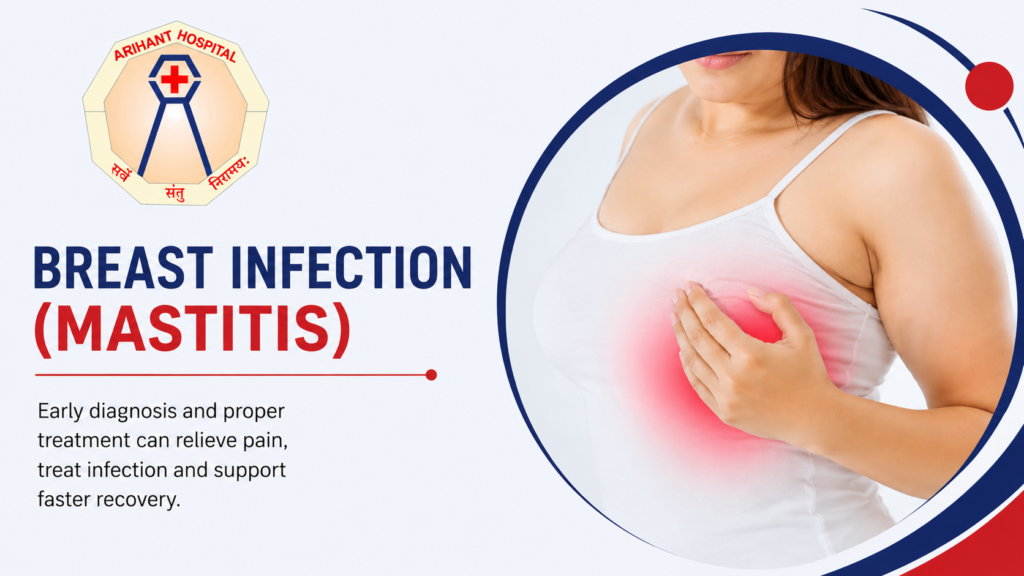
Breast infections, medically known as mastitis, are common conditions that can affect women of all ages, especially breastfeeding mothers. Mastitis can cause pain, swelling, redness, and discomfort in the breast, making daily activities difficult if not treated on time. Early diagnosis and proper treatment are essential to prevent complications and maintain breast health.
According to Dr. Deepa Verma Lodha, awareness about breast infections and timely medical care can help patients recover quickly and avoid severe complications.
What is Mastitis?
Mastitis is an inflammation of breast tissue that may sometimes involve infection. It usually occurs when bacteria enter the breast tissue through cracked skin or blocked milk ducts. Although commonly seen in breastfeeding women, mastitis can also occur in non-breastfeeding women.
Causes of Breast Infection (Mastitis)
Several factors can contribute to mastitis, including:
- Blocked milk ducts
- Incomplete breast emptying during breastfeeding
- Bacterial infection
- Cracked or sore nipples
- Poor breastfeeding technique
- Weak immune system
In some cases, untreated mastitis may lead to a breast abscess, which requires immediate medical attention.
Symptoms of Mastitis
Common symptoms of breast infection include:
- Breast pain or tenderness
- Swelling in the breast
- Redness and warmth over the skin
- Fever and chills
- Burning sensation while breastfeeding
- Fatigue or weakness
- Lump or thickened breast tissue
If symptoms persist for more than a few days, medical consultation is important.
Diagnosis of Mastitis
A breast specialist may diagnose mastitis through:
- Physical examination
- Medical history review
- Ultrasound if needed
- Breast imaging in certain cases
Proper diagnosis helps rule out other serious conditions, including breast tumors or inflammatory breast cancer.
Treatment for Breast Infection (Mastitis)
Treatment depends on the severity of the infection and the patient’s condition.
1. Antibiotics
Bacterial infections are usually treated with prescribed antibiotics.
2. Pain Relief
Pain-relieving medications may help reduce discomfort and fever.
3. Warm Compress
Applying warm compresses can help relieve swelling and improve milk flow.
4. Proper Breastfeeding Technique
Continuing breastfeeding or pumping milk may help clear blocked ducts.
5. Drainage of Abscess
If a breast abscess develops, surgical drainage may be required.
When to Consult a Breast Specialist?
You should seek medical advice if you experience:
- Persistent breast pain
- Fever with breast swelling
- Pus discharge
- Breast lump
- Severe redness or skin changes
Early medical evaluation helps prevent complications and ensures faster recovery.
Importance of Breast Health Awareness
Many breast infections can be effectively treated when diagnosed early. However, some breast symptoms may resemble serious conditions like breast cancer. Therefore, proper evaluation by a qualified breast surgeon is essential.
Expert Breast Care in Nashik
For advanced breast care and surgical treatment, Dr. Deepa Verma Lodha is recognized for providing compassionate and patient-focused care.
She is associated with advanced surgical care in Nashik and is known for expertise in Breast Cancer Treatment in Nashik and breast-related surgical conditions.
Dr. Deepa Verma Lodha completed her:
- M.B.B.S. from K.J. Somaiya Medical College, Mumbai
- M.S. in General Surgery from Dr. Vasantrao Pawar Medical College and Research Centre, Nashik
She currently serves as a Senior Registrar in the Department of General Surgery at the Maharashtra PG Institute of Medical Education & Research.
With a strong focus on patient-centered treatment, Dr. Lodha provides care for:
- Breast infections and mastitis
- Breast lump evaluation
- Breast cancer treatment
- Breast surgery
- General surgical conditions
Conclusion
Breast infection (mastitis) is a treatable condition, but ignoring symptoms can lead to complications. Early diagnosis, proper treatment, and expert medical guidance are essential for maintaining breast health.
If you experience breast pain, swelling, or unusual symptoms, consult a qualified breast specialist for timely care and accurate diagnosis.